Microsoft Fabric Copilot Explained: The Complete Guide to AI-Powered
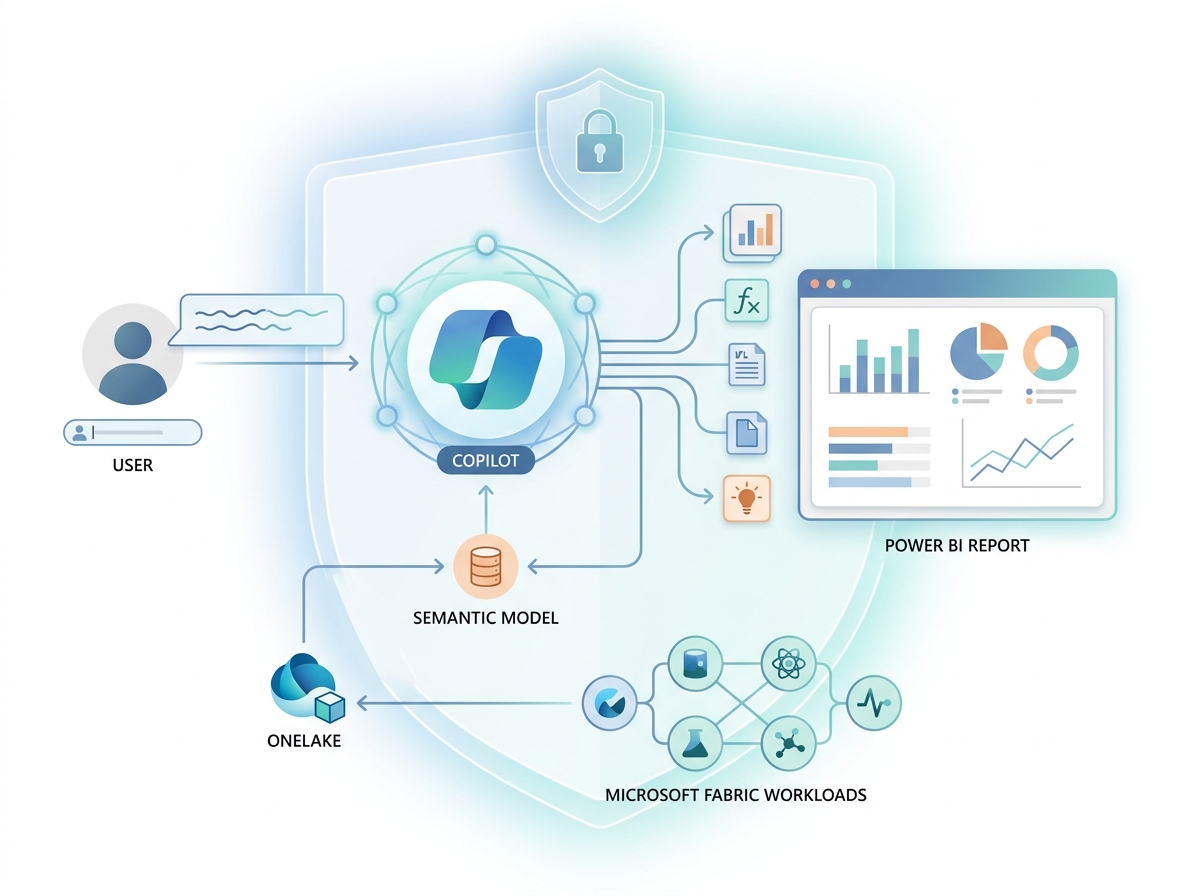
Microsoft Fabric Copilot using natural language, semantic models, and governed enterprise data to generate reports, DAX, and analytics inside Microsoft Fabric.

Artificial intelligence has moved from a buzzword to a working tool inside analytics platforms, and Microsoft Fabric Copilot sits right at the center of that shift. Instead of writing every measure, query, and report by hand, you can now describe what you want in plain language, and Copilot helps you build it. However, Copilot is … Read more

Power BI Semantic Models Explained: Complete Beginner to Enterprise Guide

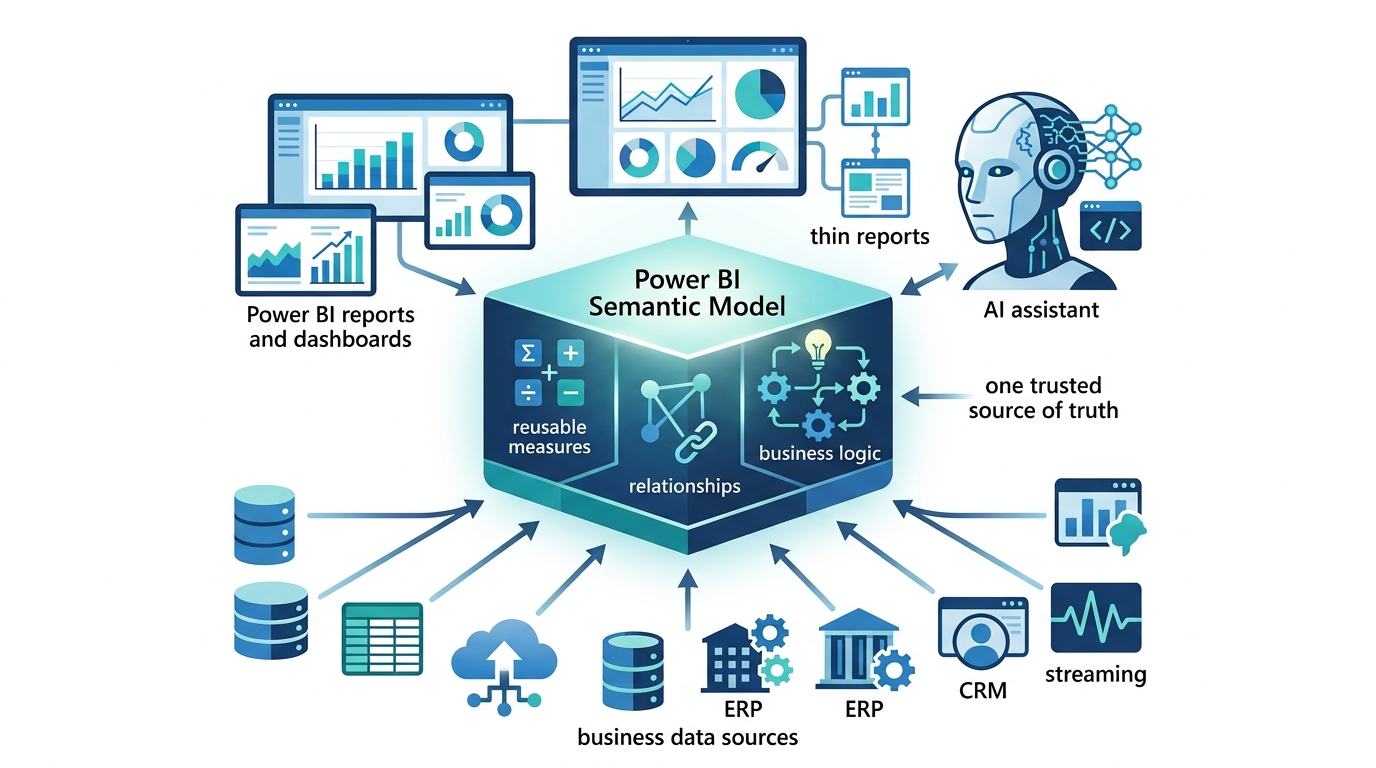
Power BI Semantic Model acting as a shared data-and-logic layer that powers multiple reports, dashboards, thin reports, and AI with consistent business logic

Almost everything you build in Power BI ultimately rests on one thing: the semantic model. Every report, every dashboard, and increasingly every Copilot answer draws its numbers and its business logic from a semantic model underneath. Therefore, if you want to move from building one-off reports to building trusted, enterprise-wide analytics, you first need to … Read more

OneLake Explained: The Complete Guide to Microsoft Fabric’s Unified Data

Microsoft OneLake providing a unified data lake that enables Power BI, Fabric workloads, and enterprise departments to share one governed copy of data.

If Microsoft Fabric is the unified analytics platform, OneLake is the ground it stands on. Every workload in Fabric, reporting, engineering, warehousing, data science, and real-time analytics, reads and writes the same data through OneLake, which is why Microsoft calls it “The OneDrive for data.” Understanding OneLake is the key to understanding why Fabric works … Read more

Microsoft Fabric Explained: Complete Guide to the Unified Analytics Platform

Microsoft Fabric unified analytics platform connecting OneLake, Power BI, Data Factory, Data Engineering, Data Science, Data Warehouse, and Real-Time Intelligence in a single cloud ecosystem.

For years, building a complete analytics solution meant stitching together separate products: one tool to move data, another to store it, another to transform it, another for data science, another for the warehouse, and Power BI at the end for reporting. Each had its own service, its own copies of the data, its own bill, … Read more